AI - ENABLED SMART DUST COLLECTION SYSTEM
AI-ENABLED SMART DUST COLLECTION SYSTEM
From Traditional Dust Collection to Monitoring, Analytics, and Operational Optimization
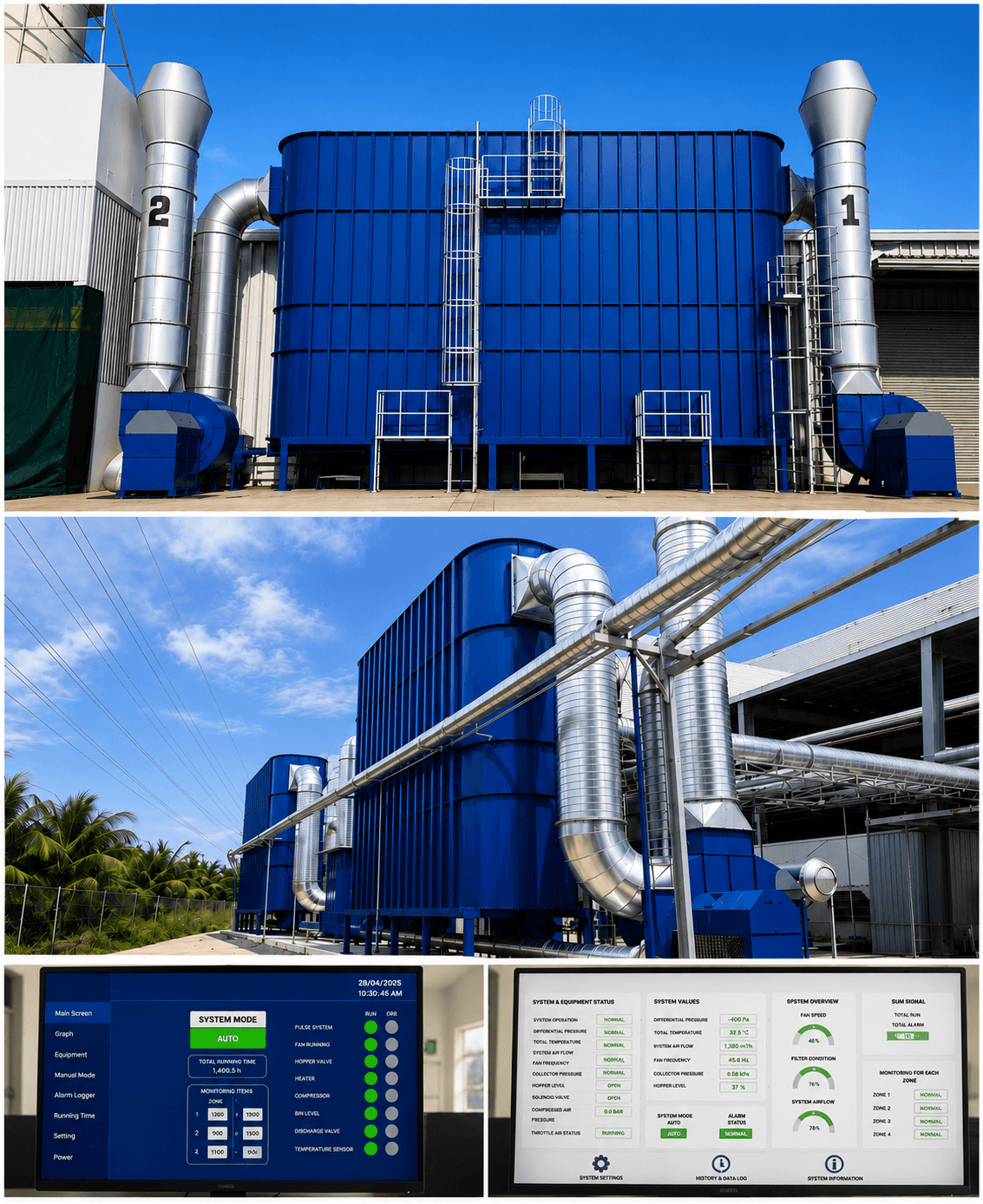
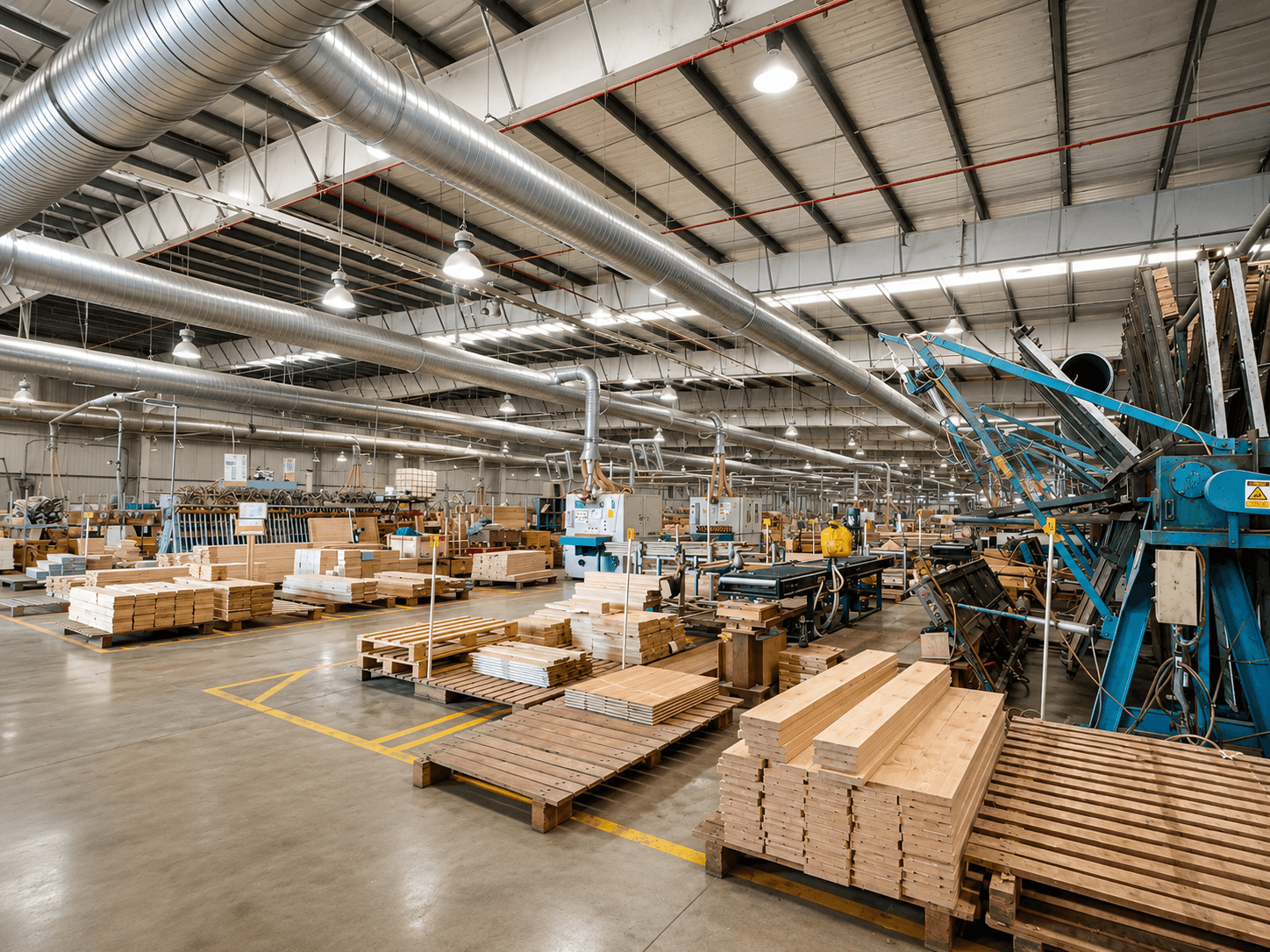
In woodworking factories, furniture manufacturing facilities, and other industrial plants, a Dust Collection System plays an important role in maintaining a clean production environment, protecting equipment, and ensuring safe working conditions.
Today, a dust collection system is no longer limited to:
Start the Fan → Extract Dust → Filter Dust
By integrating PLCs, industrial sensors, IIoT, databases, and Artificial Intelligence (AI), a conventional dust collection system can evolve into a Smart Dust Collection System capable of collecting data, monitoring operating conditions, analyzing performance, and supporting operational optimization.
1. From a Traditional Dust Collection System
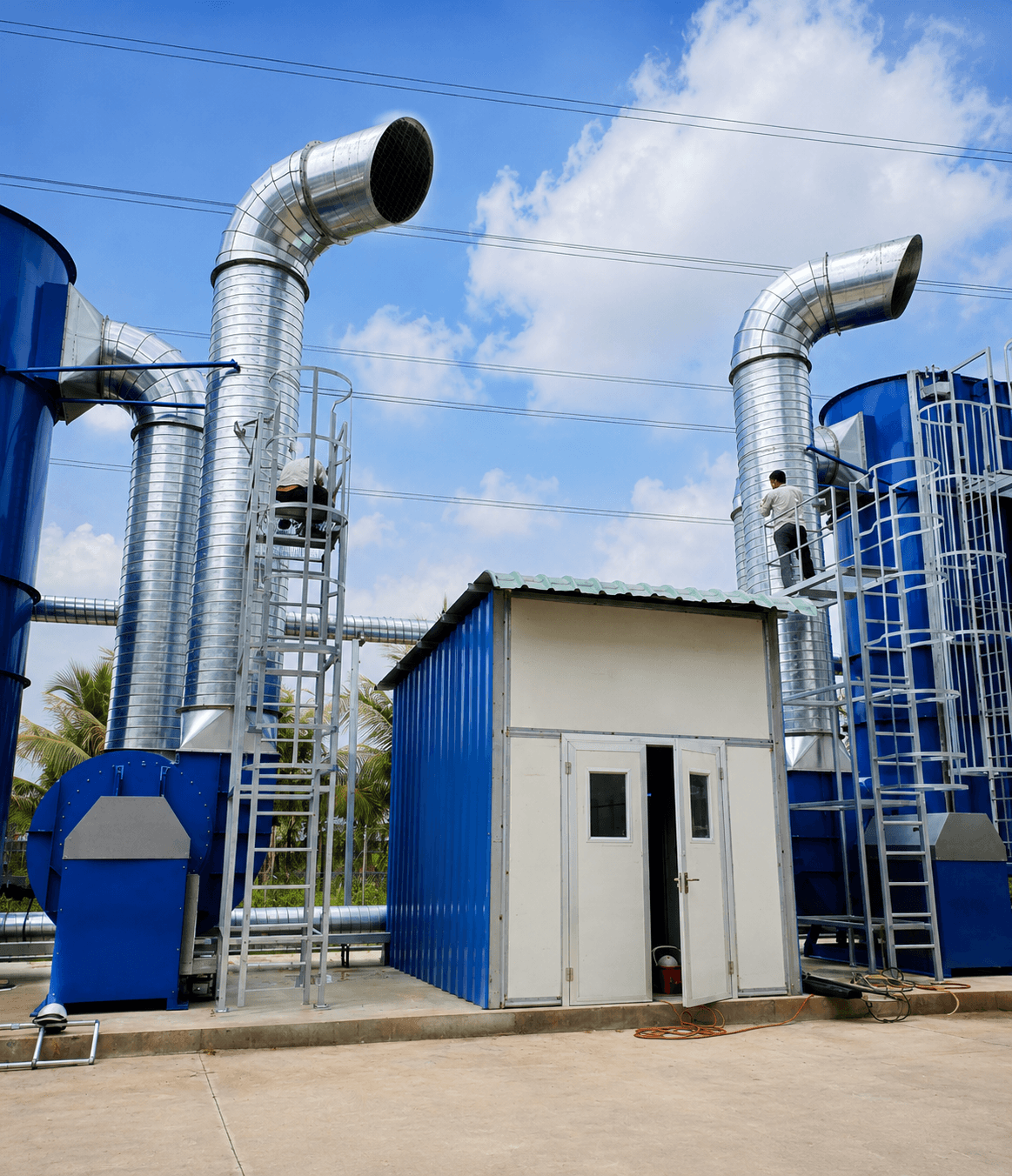
A typical industrial dust collection system consists of:
Production Machines → Ductwork → Main Fan → Filter System → Dust Collection
The PLC controls key equipment such as:
Main Fan & VFD
Rotary Valve
Screw Conveyor
Damper
Filter Cleaning System
Motors & Dust Transport System
Alarms, Interlocks & Protection
The PLC ensures stable real-time operation of the system. However, a significant amount of operational data generated every day can be further utilized and analyzed.
2. Turning Operational Data into Valuable Information
Industrial sensors and measurement devices can be integrated to continuously collect:
Data Category Typical Parameters Air System Air Flow, Air Velocity, Duct Pressure Filter Differential Pressure, Cleaning Cycle Energy Current, Power, Power Factor, Energy Consumption Equipment Running Hours, Fan Speed, VFD Frequency Condition Temperature, Vibration, Dust Level
The data can be transmitted through industrial communication protocols such as Modbus TCP/IP, PROFINET, OPC UA, etc., and stored in a centralized database instead of being displayed only temporarily on the PLC/HMI.
3. Smart Dust Collection Architecture
A Smart Dust Collection System can be built based on the following architecture:
Sensors & Machines
↓
PLC / Industrial Controller
↓
Industrial Ethernet / IIoT
↓
Data Collection
↓
SQL Database
↓
Monitoring & Analytics
↓
AI / Machine Learning
The PLC remains responsible for real-time control. AI does not replace the PLC; instead, it adds an additional layer for analytics, prediction, and operational optimization.
4. What Can AI Bring to the System?
When sufficient high-quality historical data has been collected, AI and analytical algorithms can support various practical applications.
Predictive Maintenance
By combining:
Vibration + Temperature + Current + Running Hours
the system can identify early abnormal trends related to:
Bearing degradation
Fan imbalance
Mechanical misalignment
Motor overload
This allows maintenance teams to proactively inspect equipment before a serious failure occurs.
Filter Condition Monitoring
By simultaneously analyzing:
Differential Pressure + Air Flow + Fan Speed + Cleaning Cycle + Running Hours
the system can identify trends such as:
Abnormally increasing differential pressure
Increasing cleaning frequency
Decreasing air flow
Changes in filtration performance over time
This information can support filter bag condition assessment and help establish appropriate maintenance schedules.
5. AI and Energy Optimization
The Main Fan is typically one of the largest energy consumers in a dust collection system.
The actual extraction demand varies depending on the number of production machines currently operating:
More machines operating → Higher required Air Flow
Fewer machines operating → Lower required Air Flow
By collecting the operating status of individual machines, the system can analyze:
Machine Demand → Required Air Flow → Fan Speed → Power Consumption
Combined with VFD control, this provides the foundation for a Demand-Based Control strategy, allowing fan operation to be adjusted according to actual production demand.
The objective is not simply to reduce fan speed, but rather to:
Find the most energy-efficient operating point while still maintaining the required air flow for effective dust extraction.
6. From Automation to AI Optimization
The system can progressively evolve through different levels:
LEVEL 1 — AUTOMATION
PLC + HMI
↓
Control & Monitoring
LEVEL 2 — DATA LOGGING
Sensors + PLC + Database
↓
Data Collection
LEVEL 3 — SMART MONITORING
Dashboard + Historian + Alarm
↓
Monitoring & Trend Analysis
LEVEL 4 — ANALYTICS
Energy + Air Flow + DP + Machine Demand
↓
Performance Analysis
LEVEL 5 — AI / MACHINE LEARNING
Predictive Maintenance + Anomaly Detection
↓
Prediction & Abnormality Detection
LEVEL 6 — INTELLIGENT CONTROL
AI Recommendation + PLC + VFD
↓
Optimized Operation
This represents the transition from a conventional Dust Collection System to an AI-Enabled Smart Dust Collection System.
7. AI Does Not Replace the PLC – AI Makes the System Smarter
Each technology layer has its own role:
PLC → Control
Sensors & IIoT → Data Collection
Database → Historical Data Storage
Monitoring Platform → Visualization
AI → Analytics • Prediction • Optimization
This allows the maintenance and operational strategy to progressively move from:
Reactive Maintenance
Failure → Repair
↓
Preventive / Predictive Maintenance
Detect Trends → Proactive Maintenance
↓
Optimization
Data → Analytics → Operational Optimization
Towards Smart Dust Collection
The integration of:
Dust Collection + Automation + IIoT + Database + AI
enables the dust collection system to go beyond its conventional dust extraction function and provide additional capabilities such as:
Real-time equipment monitoring
Anomaly detection
Predictive maintenance
Filter condition monitoring
Energy consumption analysis
Fan & VFD optimization
Reduction of unplanned downtime
Support for energy management and ESG initiatives
From Monitoring to Optimization
A traditional system answers:
“Is the system running?”
Smart Monitoring answers:
“How is the system operating?”
And AI moves toward answering a more important question:
“How should the system operate to achieve better performance?”
This is the transition from a traditional dust collection system to a Smart Dust Collection System – where Automation generates data, IIoT connects the data, and AI transforms the data into value.