SCARA Robots and 6 - Axis Robot - Two Core Solutions For Industrial Automation.
In recent years, industrial robots have become an indispensable part of modern manufacturing lines. Beyond automating repetitive tasks, robots help improve productivity, ensure product quality, and reduce dependence on manual labor.
Among the various types of industrial robots available today, SCARA Robots and 6-Axis Robots are the two most widely used solutions. Each is designed with its own unique advantages and is suited to different manufacturing applications.
SCARA Robots – Specialists in Speed and Precision
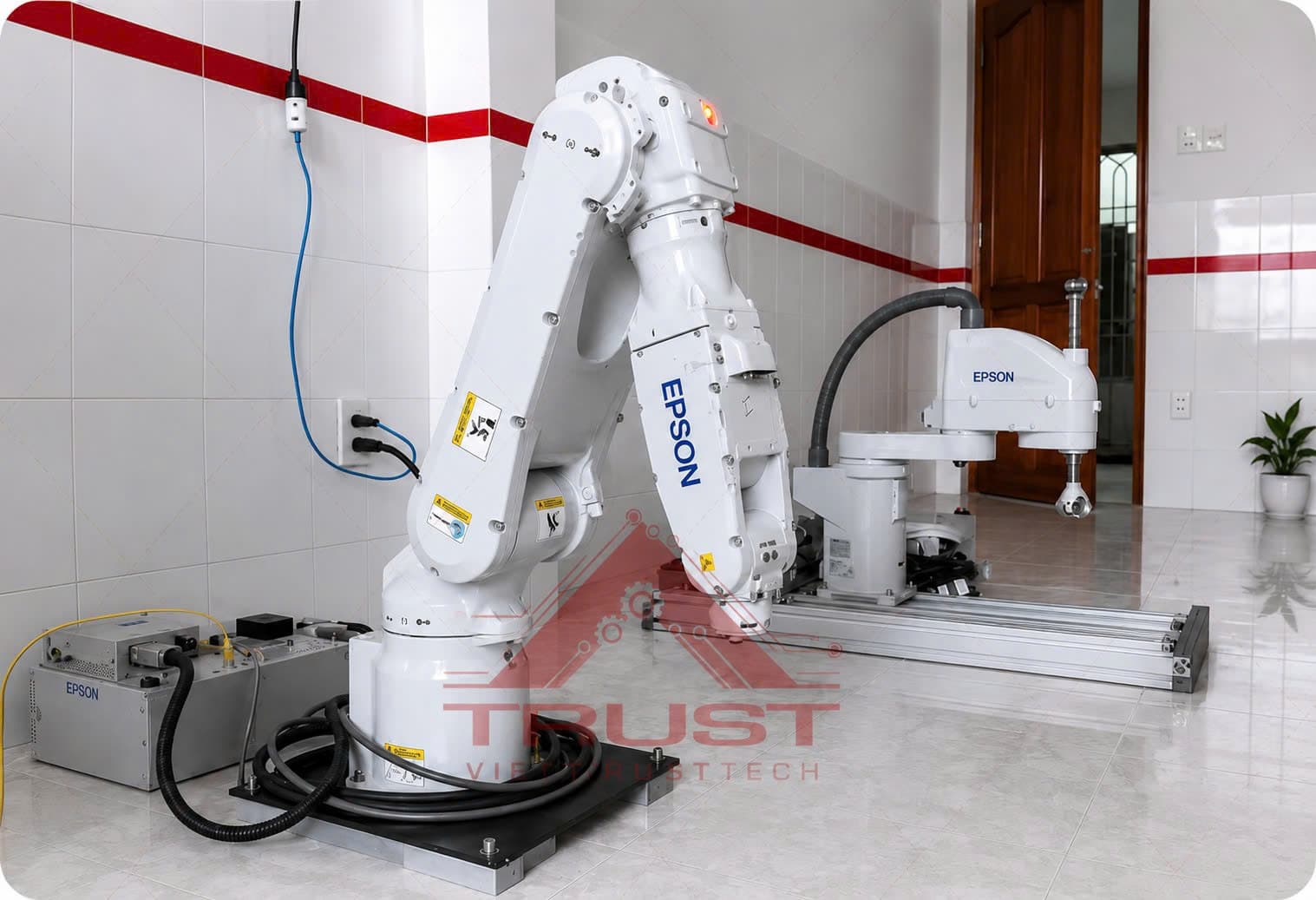
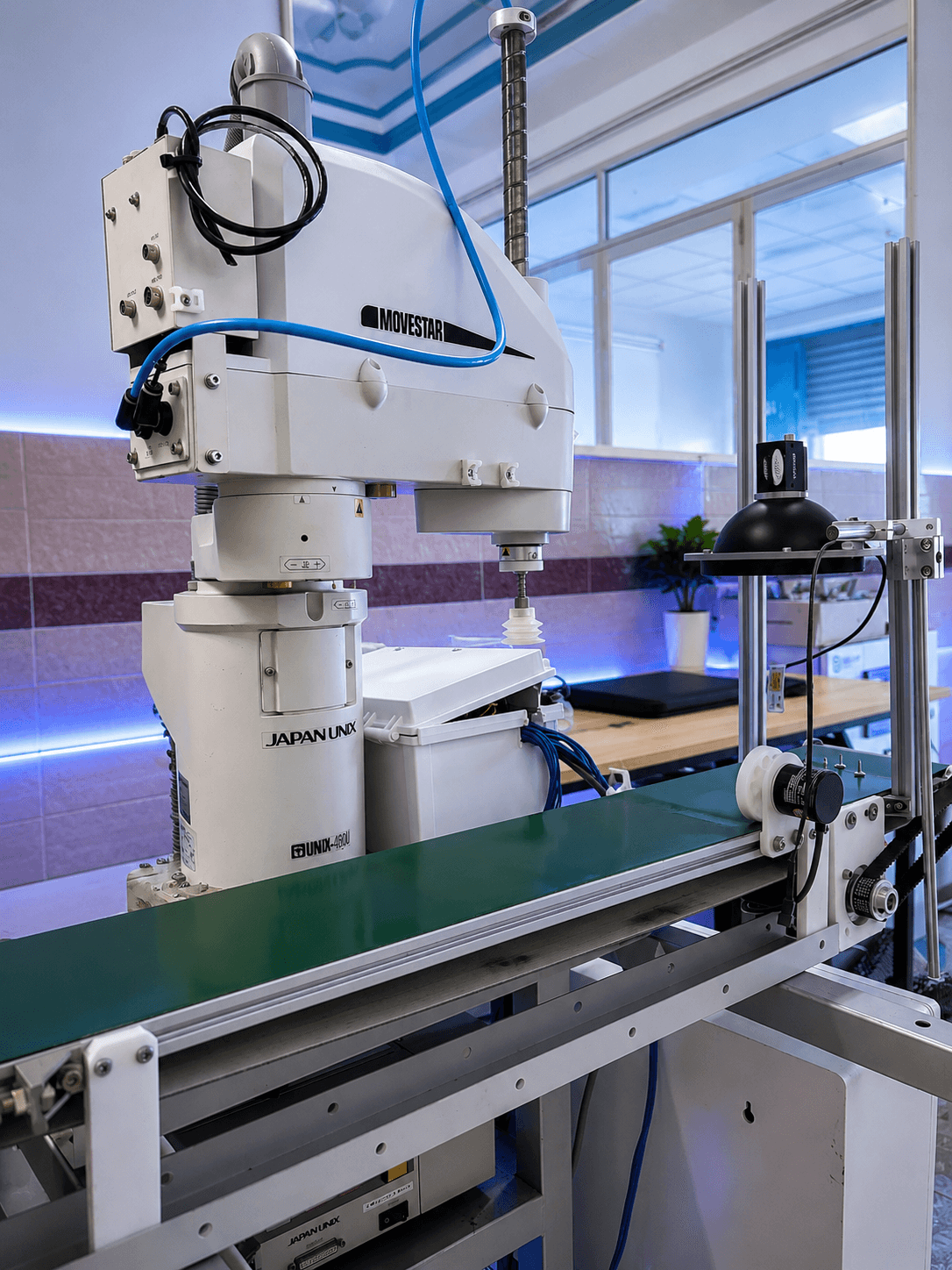
SCARA (Selective Compliance Assembly Robot Arm) is a robot designed with four degrees of freedom, optimized for horizontal movements. Thanks to its simple mechanical structure and lightweight design, a SCARA robot can move at extremely high speeds while maintaining exceptional positioning accuracy.
This is why SCARA robots have become the preferred choice in electronics manufacturing, semiconductor production, medical device assembly, and other high-speed assembly applications.
Typical SCARA robot applications include:
Pick and Place
Electronic component assembly
Automatic screw driving
Machine loading
Product packaging
Machine Vision inspection
Product sorting and classification
The greatest advantage of SCARA robots is their extremely fast cycle time, significantly increasing production throughput. At the same time, both the initial investment and maintenance costs are relatively economical compared to many other robot types.
However, because SCARA robots primarily operate on a horizontal plane, they are not suitable for applications requiring multiple approach angles or complex three-dimensional movements.
6-Axis Robots – Flexible Like the Human Arm
While SCARA robots are optimized for speed, 6-Axis Robots are designed to provide maximum flexibility.
With six degrees of freedom, a 6-axis robot can move and rotate in multiple directions, closely mimicking the movements of a human arm. This enables the robot to approach products from different angles and perform efficiently in complex three-dimensional workspaces.
Typical applications include:
Pick and Place
Mechanical assembly
Welding
Adhesive dispensing
Polishing
Machine Tending (loading and unloading CNC machines)
Camera-based inspection
Palletizing and Depalletizing
Their outstanding flexibility allows 6-axis robots to replace human operators in many tasks requiring complex motion or operation in hazardous environments.
On the other hand, the mechanical structure and control system of a 6-axis robot are more sophisticated than those of a SCARA robot. As a result, their cycle times are generally slower, and their investment costs are typically higher.
Which One Should You Choose: SCARA or a 6-Axis Robot?
There is no single robot that is ideal for every application. The right choice depends entirely on the specific requirements of the production process.
If a manufacturing process requires extremely high speed, primarily horizontal movements, and high positioning accuracy, a SCARA Robot is the optimal solution.
Conversely, if the application requires the robot to approach products from multiple directions, operate within a three-dimensional workspace, or perform complex motion paths, a 6-Axis Robot is the more suitable option.
In many modern factories, these two types of robots are used together. SCARA robots are responsible for high-speed assembly operations, while 6-axis robots handle applications requiring greater flexibility, such as machine tending, machine vision inspection, packaging, and palletizing.
Robots and Machine Vision – The Combination Behind Smart Manufacturing
Today, industrial robots no longer operate as standalone systems. They are increasingly integrated with Machine Vision, Artificial Intelligence (AI), the Industrial Internet of Things (IIoT), and Manufacturing Management Systems.
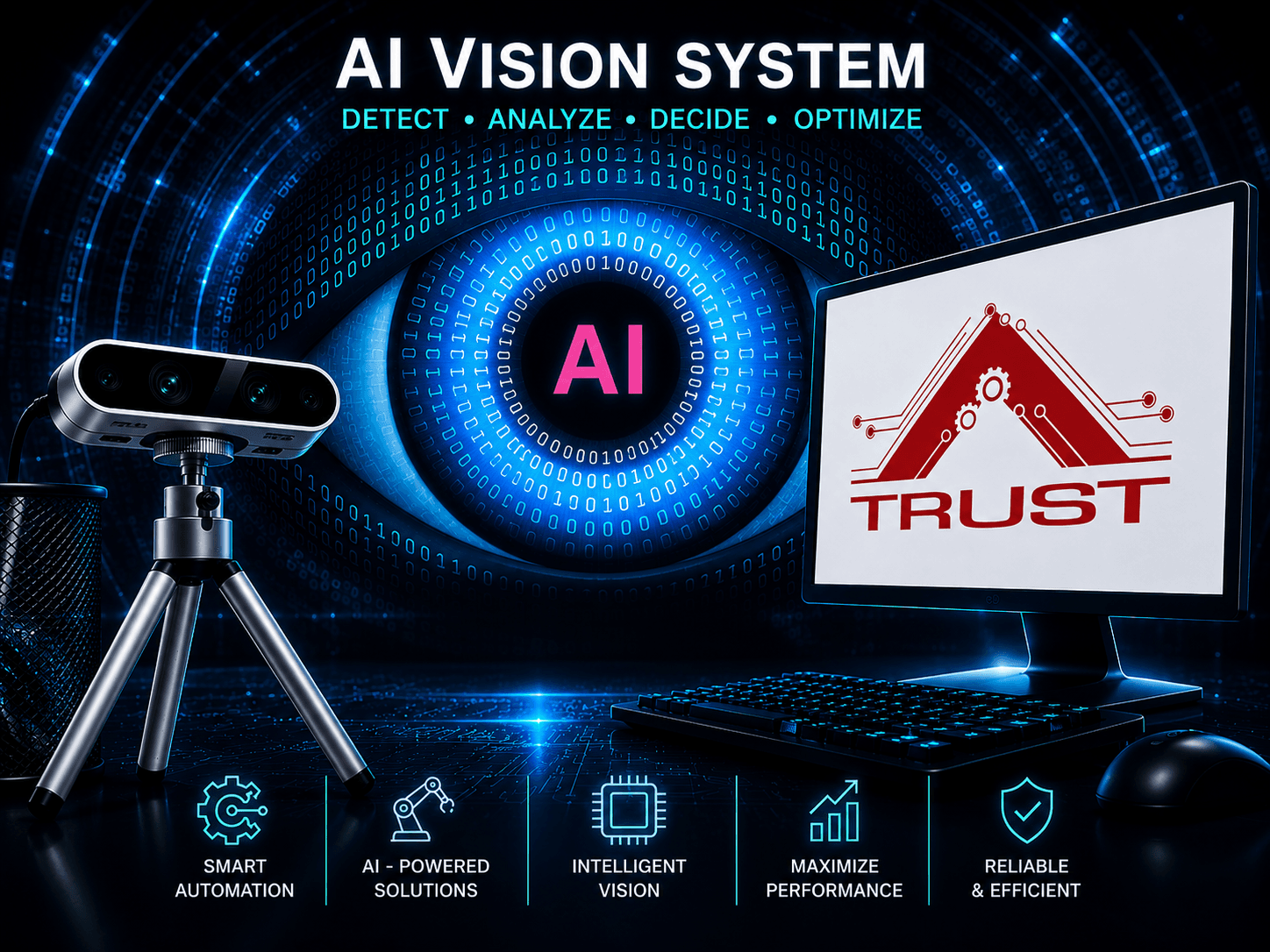
Industrial cameras enable robots to locate products, identify orientation, read QR codes, and detect defects before executing operations. At the same time, robot-generated data can be integrated into manufacturing management systems to monitor productivity, cycle times, operational status, and support predictive maintenance.
The combination of robots, Machine Vision, and AI is creating intelligent production lines where machines are no longer limited to performing automated tasks—they can also observe, analyze, and make data-driven decisions.
Conclusion
Both SCARA Robots and 6-Axis Robots are essential components of modern industrial automation. Each robot type is developed to solve different manufacturing challenges, ranging from high-speed production tasks to applications requiring flexible movement in three-dimensional space.
Selecting the right robot not only helps manufacturers optimize investment costs but also improves operational efficiency, enhances product quality, and establishes the foundation for future smart factories. When integrated with Machine Vision, Artificial Intelligence, and IIoT, robots become more than simply the "arms" of a production line—they become an integral part of the digital manufacturing ecosystem, helping businesses strengthen their competitiveness and achieve sustainable growth.